Tapered vs. Round Toe Boots: A Performance Downgrade
 Maya ChenContributing Editor
The conventional wisdom says that for a walking boot to be stylish, it must have a sleek, tapered silhouette. This design philosophy, borrowed from fashion footwear, is treated as a given. It is also a significant performance liability. The pursuit of a narrow aesthetic directly undermines the foot's natural mechanics, sacrificing stability and traction for a profile that has no functional basis in outdoor environments.
Here's the part nobody talks about: traction begins inside the boot, not with the outsole lugs. When your foot strikes the ground, your toes must splay to create a wide, stable base. This action is critical for balance on uneven terrain. Tapered toe boxes constrict this natural movement, forcing the big toe inward and compromising the entire structure of the foot. This not only reduces your base of support but also prevents the foot from properly loading, rendering even the most aggressive outsole less effective. For those seeking truly stylish round toe walking boots, the priority must be a shape that enables, rather than fights, your anatomy.
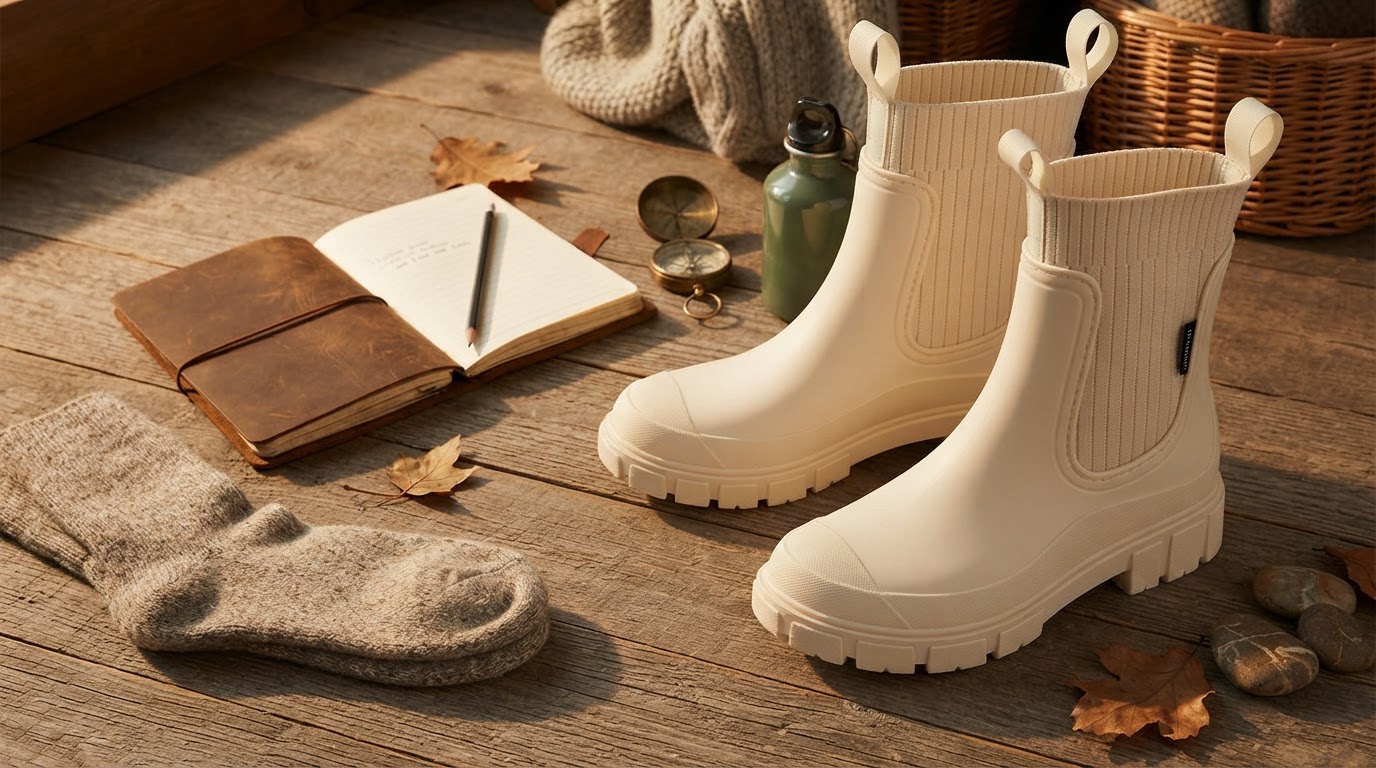
The engineering of the Women’s Outdoor Boots | Rounded Toe Design directly addresses this failure. By using a radial arc that mirrors the natural shape of the human forefoot, it preserves the space required for toe splay. This isn't about accommodating wide feet; it's about respecting universal biomechanics. As footwear brand Altra notes in their explanation of FootShape™ design, allowing the toes to relax and spread out naturally enhances both stability and power. A boot that ignores this principle is fundamentally flawed, regardless of its materials or brand name. Evaluating footwear on these technical requirements for a performance boot is non-negotiable.
Run the math: on a 10-mile hike, you will take approximately 20,000 steps. In a tapered boot, each step forces your forefoot into a compressed, unstable position. This cumulative stress leads to accelerated fatigue, hotspots, and a measurable decrease in balance over time. A rounded design distributes impact forces evenly across the metatarsal heads, maintaining foot integrity from the first mile to the last. The goal of a performance boot is to disappear on your foot, allowing you to focus on the terrain. This is only possible when the design works with your foot, not against it. Ensuring a proper fit within this superior geometry is the final step.
I'll change my mind when a peer-reviewed study demonstrates that compressing the forefoot enhances lateral stability without causing nerve impingement or reducing the foot's propulsive efficiency. Until then, the objective data supports a rounded, anatomically-correct toe box as the superior choice for walking and hiking performance.
Why does toe shape matter for traction?
Traction is a two-part system: the outsole's grip on the ground and the foot's stability inside the boot. If the toe box is too narrow, it prevents your toes from spreading out to create a stable platform. This internal instability means your foot cannot properly engage the outsole lugs with the ground, effectively nullifying the tread's design. A rounded toe enables the necessary foot splay for a stable base.
Are round toe boots only for people with wide feet?

Photo by thevibrantmachine on Pexels
No. This is a misconception based on poor footwear design. A rounded, anatomical toe box benefits virtually all foot types because the human foot is naturally wider at the toes than at the heel. The design is not about excessive width but about providing the necessary space for natural toe splay, which is essential for balance and comfort for narrow, regular, and wide feet alike.