The Biomechanical Flaw in Most Rounded Toe Boots
 Maya ChenContributing Editor
Everyone buys rounded-toe Western boots for 'comfort,' but their rigid construction often negates the very biomechanical freedom the rounded shape is supposed to provide. The conventional wisdom says a wider toe box allows for natural toe splay, reducing compression and increasing stability. While true in principle, this benefit is nullified when the boot's sole is too stiff to allow the foot to bend. The market for women's outdoor boots with a rounded toe is saturated with designs that prioritize a heritage aesthetic over functional movement, creating a fundamental mismatch for walking on anything but flat, predictable surfaces.
The Illusion of Comfort: Width vs. Flexibility
Here's the part nobody talks about: the initial comfort of a rounded toe boot is often just an illusion created by a wider fit. This extra volume can temporarily mask underlying biomechanical problems. True, functional comfort for outdoor activity requires more than just room for your toes; it demands a sole that works with your foot. When walking on uneven trails, your foot needs to flex at the metatarsophalangeal joints (the ball of your foot) to adapt and propel you forward. A rigid sole, common in boots designed for equestrian stirrups, prevents this natural flexion. The result is a slapping gait, increased muscle fatigue, and foot pain that the generous toe box cannot prevent. Understanding how women's outdoor boots should fit involves assessing flexibility, not just volume.
The Stirrup vs. The Trail: A Mismatch in Sole Design
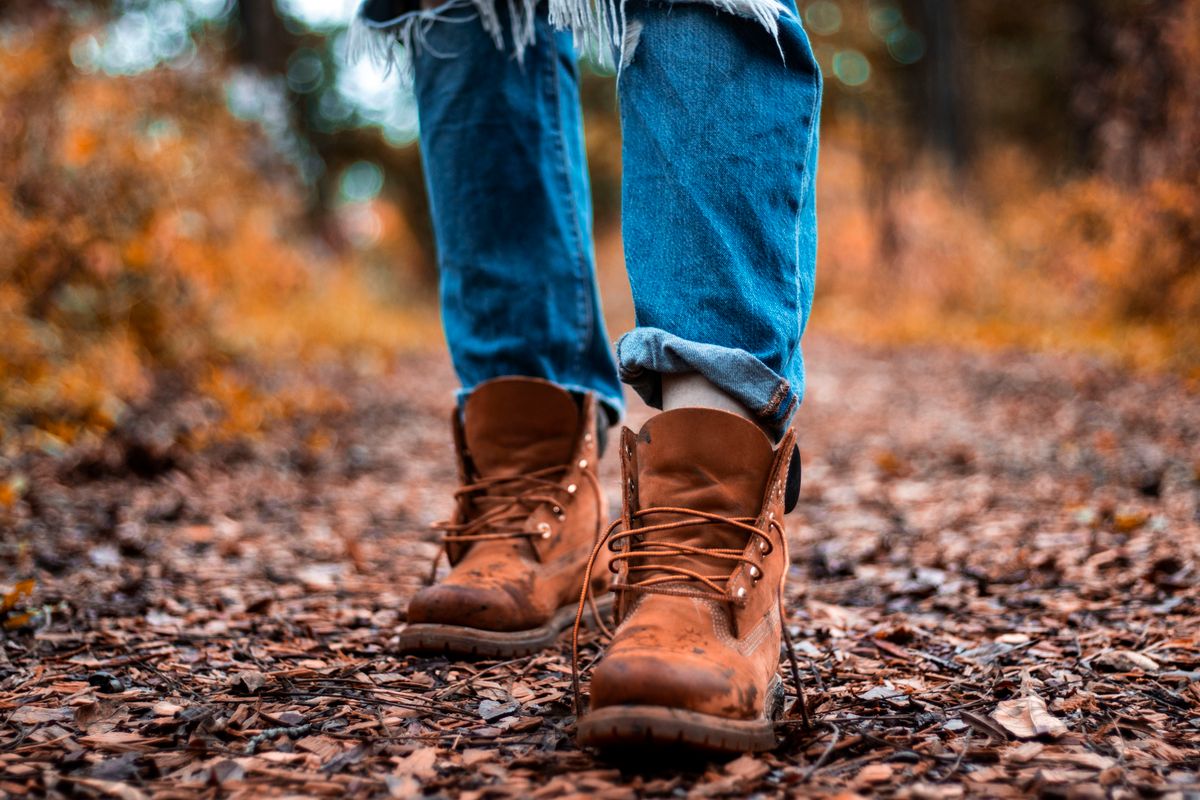
Photo by thevibrantmachine on Pexels
Traditional Western and work boots were engineered with a stiff shank and rigid sole for a reason: to provide a stable platform for standing in stirrups or on ladders. This design protects the foot from point loads but actively works against the biomechanics of a healthy stride. According to the American Podiatric Medical Association, proper walking mechanics involve a flexible forefoot that allows for a smooth heel-to-toe roll. For genuine outdoor performance, a rounded toe must be paired with a sole that bends with your foot's natural flex points. Without this pairing, the boot forces your foot to conform to its rigid shape, rather than allowing it to function as intended. This is why many find that after a few hours of walking, their 'comfortable' boots feel like restrictive casts.
Our Women’s Outdoor Boots | Rounded Toe Design directly addresses this failure by integrating a flexible forefoot with an anatomically rounded toe box. This combination ensures that the space provided by the shape is usable, allowing for both toe splay and natural joint flexion. These are not heritage boots adapted for the outdoors; they are boots engineered for walking from the ground up.
I'll change my mind when the market standard for "outdoor" rounded-toe boots prioritizes a flexible forefoot over rigid, heritage-inspired construction. Until then, the majority remain unsuitable for their marketed purpose.
Are rounded toe boots actually better for your feet?
A rounded toe shape is only better if it's part of a system that supports natural foot function. On its own, a wide toe box in a rigid boot is insufficient. For a boot to be genuinely beneficial, the rounded toe must be combined with a flexible sole that allows the ball of your foot to bend during each step. This combination promotes toe splay and proper gait mechanics, reducing strain and improving comfort during extended wear.
Why do my feet hurt in "comfort" western boots?
Your feet likely hurt because most western-style boots, even those marketed for comfort with a rounded toe, have a rigid sole and a steel or fiberglass shank. This construction is inherited from their equestrian origins, where stiffness is needed for stirrup support. When walking, this rigidity prevents your foot from flexing naturally. Your foot muscles work harder to fight the boot's structure, leading to arch strain, plantar fasciitis, and general fatigue, despite the roomy toe box.