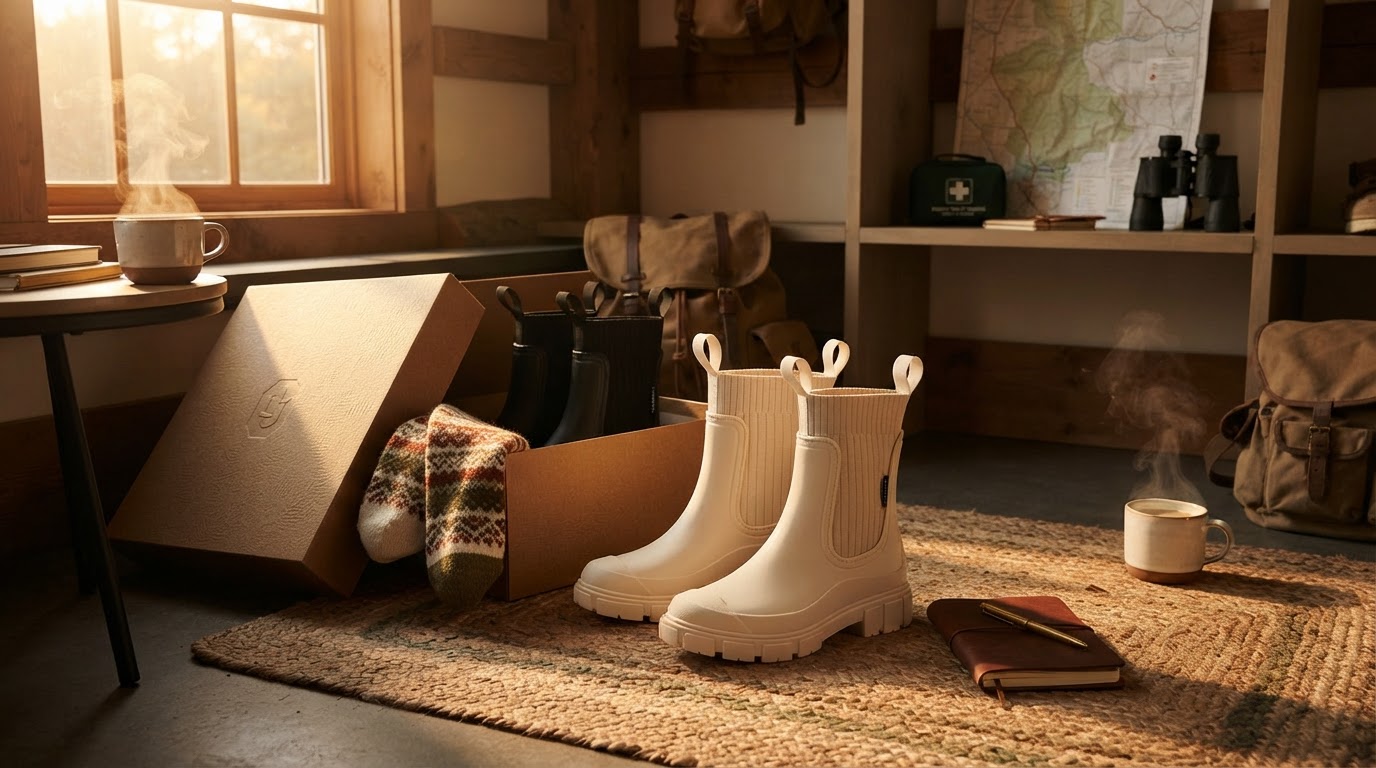
Technical Assessment of Women’s Outdoor Boots | Rounded Toe Design
 Maya ChenContributing Editor
October 14, 2026 — Recent developments in trail footwear have seen a resurgence in anatomical lasts, specifically within the Women’s Outdoor Boots | Rounded Toe Design category, challenging the industry's long-standing preference for narrow, streamlined silhouettes.
The conventional wisdom says that a tapered toe box provides better precision on technical scrambles, yet this design frequently ignores the biomechanical reality of foot swelling over long distances. According to Outdoor Gear Lab, testers frequently rank boots based on their ability to manage foot fatigue over high-mileage terrain, a metric where narrow designs often fail. By prioritizing the natural splay of the metatarsals, the Women’s Outdoor Boots | Rounded Toe Design approach addresses the primary cause of hot spots and subungual hematomas that plague hikers using standard European-cut boots.
The Anatomy of Natural Splay
Here's the part nobody talks about: the volume of a boot is not just about the width at the ball of the foot, but the vertical clearance and radius of the toe box. The Women’s Outdoor Boots | Rounded Toe Design framework utilizes a specific geometry that increases internal volume without sacrificing heel lock. While many manufacturers attempt to achieve comfort through soft foam, this design relies on structural space. When examining current market options, such as the Shyanne Endurance Hiking Boots found at Boot Barn, which retail for approximately $124.99, we see a clear shift toward these rounded profiles to accommodate the foot's natural expansion. Run the math: a foot can expand by up to 5% in volume during a twelve-mile trek. If your boot doesn't provide the literal millimeters required for this physiological change, the result is nerve compression and reduced circulation. The rounded design ensures that the big toe remains in a neutral alignment, which is critical for power transfer during the push-off phase of a stride. This is particularly relevant when selecting stylish round toe walking boots for longevity, as the structural integrity of the toe box prevents the upper material from collapsing onto the foot over time. Furthermore, why choose Women’s Outdoor Boots | Rounded Toe Design? because the increased surface area at the front of the boot allows for better weight distribution across the outsole, reducing the localized pressure that leads to premature wear on the tread.
Expert tip: When testing the fit, ensure there is exactly 12mm of space between your longest toe and the front of the boot while standing; the rounded toe design only functions correctly if the foot is not sliding forward into the curve during descents.
Maintaining this alignment is a core component of comfortable round toe hiking boots guide, which emphasizes that volume is a prerequisite for comfort rather than an optional feature. Achieving this balance requires rigorous five comfort checks for women’s outdoor boots | rounded toe design to ensure the lacing system compensates for the wider forefoot. I'll change my mind when a tapered-toe manufacturer can prove that distal toe compression doesn't objectively decrease balance on uneven surfaces.
Shop Women’s Outdoor Boots | Rounded Toe Design.
Sources
- Women's Hiking Boots | Boot Barn
- Women's Steel Toe Hiking Boots - The Working Person's Store
- Women's Hiking Boots: Lightweight & Waterproof | REI Co-op