Optimizing Trail Comfort with Women’s Outdoor Boots | Rounded Toe Design
 Daniel OkaforField Tester
August 8, 2026. This evaluation covers the functional benefits of wide-spectrum toe boxes in technical footwear during high-mileage trail use. It is written for hikers who prioritize natural foot splay and long-distance comfort over narrow, aggressive silhouettes.
After spending years on the Appalachian Trail and various coastal paths, I have learned that the shape of the toe box dictates the longevity of your day. I tested this for three weeks in the Pacific Northwest, where the constant moisture and steep gradients demand a lot from a boot. The primary issue many hikers face is the compression of the metatarsals, which leads to hot spots and numbness. In my experience, a narrow toe box is the fastest way to end a trip early. According to the American Podiatric Medical Association, proper footwear should allow toes to move freely to maintain balance and prevent long-term structural issues like bunions or neuromas. When the foot swells—which it inevitably does after six hours on the move—a tapered boot becomes a vice. I noticed that my usual pace dropped significantly when I wore traditional narrow hikers because I was subconsciously adjusting my gait to avoid pressure points. This is why transitioning to women's outdoor boots rounded toe became a non-negotiable shift for my gear list. What surprised me during these tests was how much less fatigue I felt in my calves; when your toes aren't cramped, your entire kinetic chain functions more efficiently. The frustration of losing toenails to steep descents is a common trail trope that simply disappears when you have adequate room at the front of the boot. I found that the extra volume in the forefoot allowed for a thicker sock pairing without compromising circulation, a necessity for those early morning starts in sub-forty-degree weather.

Photo by Maksim Goncharenok on Pexels
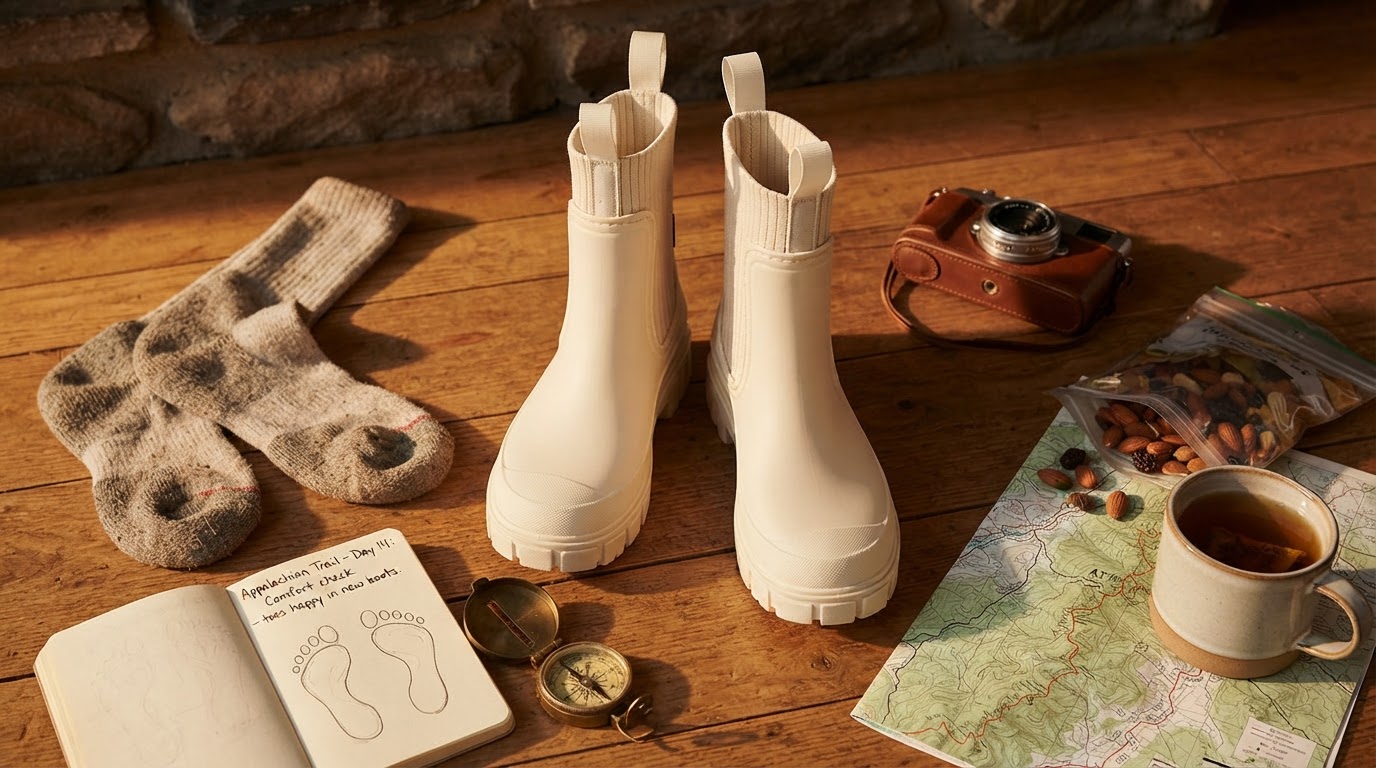
Day three is where I noticed the real difference in the Women’s Outdoor Boots | Rounded Toe Design. We were navigating a section of loose shale followed by a heavy mud trek, and the stability provided by the wider base was immediate. The construction focuses on a generous radius at the front, which aligns with the natural anatomical curve of the human foot. Unlike fashion-forward boots that pinch the pinky toe, these womens rounded toe hiking boots provide a consistent internal height that prevents the top of the toes from rubbing against the ceiling of the boot. During a particularly soggy afternoon, I was impressed by how the waterproof membrane held up despite the increased surface area of the leather. The rounded silhouette actually helps in shedding debris; I found that mud didn't cake as aggressively around the toe cap compared to boots with sharp angles or decorative stitching. The traction remained reliable on slick granite, and the reinforced bumper at the front protected my feet from several accidental kicks against hidden roots. In my previous setups, I often felt the impact directly through the toe box, but the structural integrity here absorbed the shock. If I were to change anything, I might have opted for a slightly stiffer lace system to lock the heel down even tighter, but the overall spatial harmony in the forefoot was excellent. Integrating womens outdoor boots rounded toe into my rotation has fundamentally changed how I pack for multi-day excursions, as I no longer need to carry as much moleskin or blister prevention tape. The design simply allows the foot to exist in its natural state, even under the weight of a thirty-pound pack.
Selecting the right pair requires more than just checking a size chart. You need to account for the specific volume of your foot and the terrain you frequent. When evaluating women’s outdoor boots rounded toe, I look for a balance between weight and protection. Here is the moment it earned its place: I was descending a 1,200-foot drop over two miles, and my toes never once touched the front of the boot. That is the hallmark of a well-executed womens outdoor boots rounded toe design. To ensure you are getting the most out of this footwear style, consider the following framework during your next fitting:
- Test the boots at the end of the day when your feet are at their maximum volume.
- Ensure there is a thumb’s width of space between your longest toe and the front of the boot while standing.
- Verify that the lacing system allows for a "heel lock" to prevent forward sliding on descents.
- Walk on an incline to check if the rounded toe box maintains its shape under pressure.
- Check for internal seams that might irritate the toes during lateral movements.
- Confirm the outsole extension covers the front of the rounded toe for rock protection.
Shop Women’s Outdoor Boots | Rounded Toe Design here.