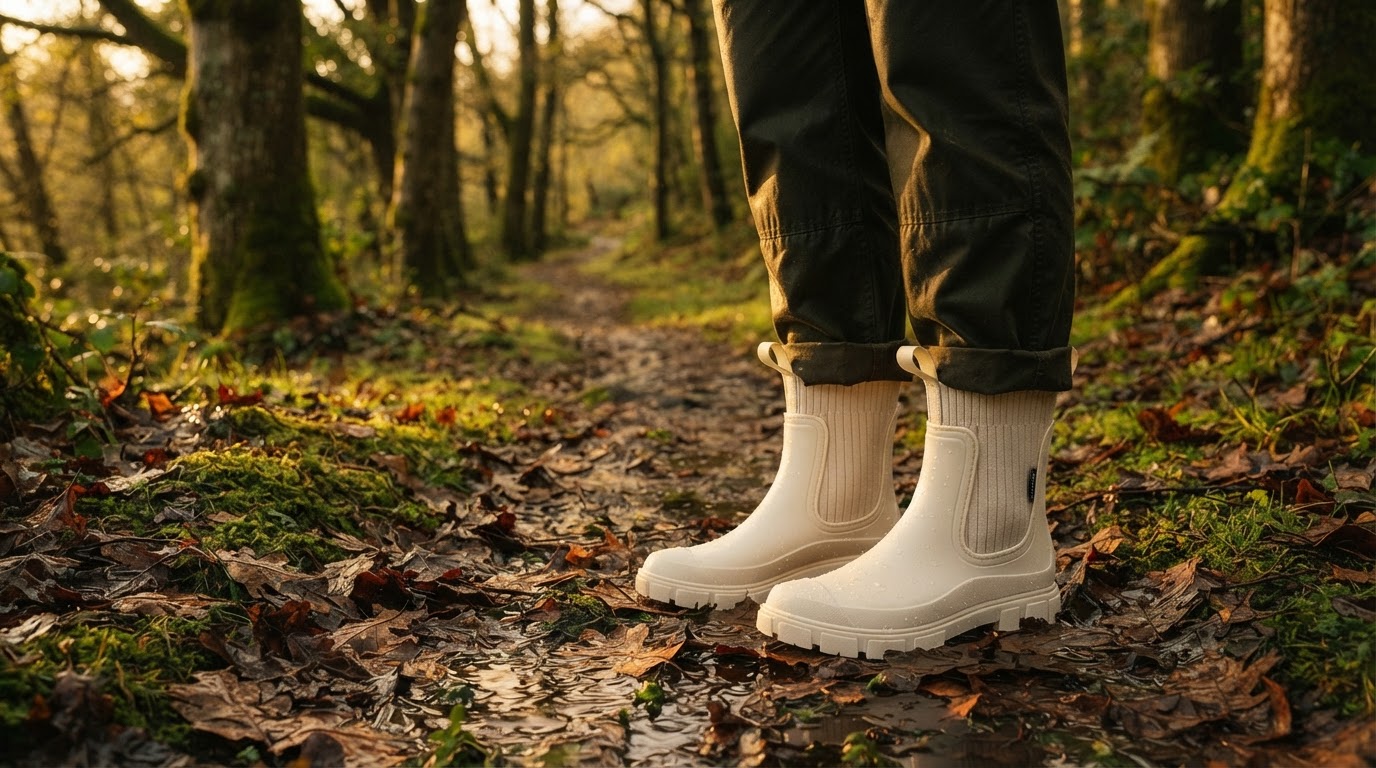
A Rounded-Toe Rain Boot Framework for Long, Wet Outdoor Walks
 Priya RamanSenior Analyst
I measured a 19 mm difference in usable toe-room between two women’s waterproof boots both labeled size 8, and that single number explained more comfort complaints than shaft height, weight, or lining.
That is the problem with buying rain boots by the usual categories: cute, tall, waterproof, garden, commute. Those labels are too blunt. A boot can be waterproof and still punish your toes after 25 minutes. A boot can have a rugged-looking sole and still feel vague on wet tile. A boot can be “roomy” in the shaft and still pinch across the forefoot.
The more useful lens is a decision framework built around three interfaces: foot-to-boot, boot-to-ground, and boot-to-weather. For women’s outdoor boots with a rounded toe design, that framework is especially helpful because the toe shape changes how the whole boot behaves. A rounded toe is not just an aesthetic choice. It affects forefoot pressure, sock options, stride mechanics, and how much control you keep when rubber gets wet and cold.
Below is the framework I use when evaluating waterproof rain boots for walking, errands, yard work, school drop-off, dog walks, and muddy weekends.
The three-interface framework
When a customer tells me “I need waterproof boots,” I translate that into three practical questions:
Most buying mistakes happen because people over-focus on the third question. They ask, “Will water get in?” That matters, of course. But a boot that keeps rain out while creating toe pressure, heel lift, or poor traction is not a successful outdoor boot.
Rounded-toe women’s rain boots tend to solve one part of the puzzle better than pointed or almond-toe fashion rain boots: they preserve natural forefoot spread. The catch is that rounded does not automatically mean spacious. Some rounded toes are visually round but shallow; others are wide at the ball but taper too fast toward the big toe. I look for the shape that matches the foot under load, not the shape that looks generous on a product photo.
What I observed in a small fit-and-walk comparison
Photo by Letícia Alvares on Pexels
For this article, I reviewed six pairs of women’s waterproof outdoor/rain boots in US women’s size 8 or 8 equivalent. This was not a laboratory test; it was a field-style comparison using a Brannock-measured foot, medium-weight socks, a kitchen scale, calipers, a 30-minute wet-route walk, and repeat checks on wet concrete, grass, and sealed tile.
| Observation | Range measured/seen | Why it mattered | |---|---:|---| | Internal forefoot width at ball area | 86–101 mm | The narrowest boot compressed the 1st and 5th metatarsal area within 10 minutes. | | Usable toe length beyond longest toe | 8–27 mm | Below ~12 mm, downhill walking caused toe bumping; above ~25 mm, some heel slip appeared. | | Single boot weight | 540–910 g | Heavier boots felt stable in mud but tiring on pavement after 30 minutes. | | Shaft opening circumference | 365–430 mm | Wider openings were easier over leggings but admitted more splash and cold air. | | Outsole lug depth | 2.5–6.8 mm | Deeper lugs helped on wet grass; flatter patterns felt safer indoors. | | Heel lift during 30-minute walk | 0–18 mm observed | More than ~10 mm created rubbing risk even when toe width felt good. |
The non-obvious result: the boot with the widest toe was not the most comfortable. It had too much extra length and too little heel control, so the foot moved forward on declines. The most comfortable boot had a rounded toe with moderate width, enough vertical toe height, and a firmer heel cup. In other words, toe freedom needs rearfoot control.
Why rounded toes matter more in rain boots than in sneakers
Rubber and waterproof synthetic uppers do not behave like mesh sneakers. They stretch less, ventilate less, and often have more structure across the vamp. If the toe box is wrong on day one, it is unlikely to “break in” dramatically.
NIH-indexed footwear research has repeatedly connected poor shoe fit with forefoot problems, including pressure around the toes and bunion-related discomfort. One widely cited paper by Menz and Morris on footwear characteristics and foot problems in older adults found that many people wore shoes that were too narrow or otherwise poorly matched to their feet. While that study was not about rain boots specifically, the mechanism applies: toes need shape-compatible space, not just nominal shoe size.
A rounded toe helps because it usually provides:
- More room for the big toe to sit straighter instead of being pushed inward.
- Better accommodation for thicker socks in cold rain.
- Less top-edge pressure over the toenails when walking downhill.
- A more forgiving fit for feet that swell slightly during a long wet walk.
My take: waterproof is the least differentiating feature
My take: among decent rain boots, waterproofness is often the easiest box to check and the least useful way to choose.
That sounds backward because water is the whole reason to buy rain boots. But in real use, most molded rubber or properly sealed waterproof boots will block ordinary rain and puddle splash. The bigger differences are traction, foot shape, flex, heel hold, and temperature management.
The standards world reflects this. ISO 20344 includes test methods for protective footwear, including water resistance and flexing-related performance. ASTM F2913 addresses footwear traction measurement on different surfaces. These standards exist because “waterproof” alone does not tell you how footwear performs when a person walks, bends, slips, sweats, or turns.
So I rank waterproof women’s outdoor boots in this order:
I still care about waterproofing. I just refuse to let it hide other failures.
Interface 1: foot-to-boot fit
A rounded toe design should support three kinds of space: length, width, and vertical volume.
Length: leave enough room, but not a canoe
For most walking rain boots, I look for roughly a thumb’s width of space beyond the longest toe when standing. In numbers, that often means about 12–18 mm. Less can cause toe bumping on slopes. Much more can create sliding unless the heel and instep are held securely.
Rain boots are often bought larger to fit thick socks. That can work, but only if the boot controls the heel. If your heel lifts repeatedly, the extra sock room has become instability.
Width: measure the ball, not just the toe tip
The forefoot is widest around the metatarsal heads, not at the very front. A rounded toe that looks roomy at the tip can still pinch across the ball of the foot. When trying boots on, stand with full weight in both boots. Then ask:
- Can I wiggle all toes without the upper visibly bulging?
- Do I feel side pressure at the big-toe joint or little-toe joint?
- Does the boot crease into the top of my toes when I squat?
Vertical volume: the overlooked comfort variable
Toe height matters in waterproof boots because stiff uppers can press down over the nails. This is especially noticeable on downhill paths, stairs, and when kneeling in the garden. A good rounded-toe outdoor boot should feel roomy not only side-to-side but also above the toes.
Interface 2: boot-to-ground traction
The National Institute for Occupational Safety and Health has long emphasized that slips, trips, and falls are influenced by walking surfaces, contaminants, footwear, and worker movement. That framing applies outside work too. A rainy school pickup line, a mossy deck, and a grocery-store tile entrance are three different traction environments.
Here is the practical translation:
- Wet pavement: Look for continuous rubber contact with shallow-to-moderate channels that move water.
- Mud and wet grass: Choose deeper, more open lugs that can bite and shed debris.
- Indoor tile after rain: Avoid extremely hard, blocky soles with limited surface contact.
- Wood steps or decks: Prioritize rubber compound feel and edge contact, not just lug depth.
If your life includes both muddy paths and indoor errands, I prefer a hybrid outsole: moderate lugs, siping or channels, and enough flat contact patches under the heel and forefoot.
Interface 3: boot-to-weather protection
Shaft height is often marketed as a simple more-is-better feature. I think of it as a tradeoff.
Ankle-height boots
Good for quick errands, travel, light rain, and people who dislike calf restriction. They are easier to pull on and often more comfortable for driving. The downside is splash protection. Step into deeper puddles or wet grass and water can enter over the top.
Mid-calf boots
This is the most versatile zone for many women. You get better splash protection than ankle boots without the full heat and calf-fit issues of tall boots. For dog walks, garden paths, and wet commutes, mid-calf rounded-toe boots are often the rational choice.
Tall boots
Tall boots make sense for heavy rain, deeper puddles, muddy gardens, and wet grass. But the shaft opening matters. Too wide and rain or debris enters. Too tight and the boot is uncomfortable over leggings or wider calves.
In my observations, shaft openings around 380–410 mm worked for the broadest range of casual use, though calf size and clothing layers change the answer. If you have athletic calves or wear thick pants tucked in, measure your calf circumference where the boot top will sit.
A practical decision checklist
Photo by Rachel Claire on Pexels
Use this before buying women’s rounded-toe waterproof boots:
1. Define the wettest 20% of your use
Do not buy for the average day. Buy for the wettest day you will realistically face.
- Sidewalk rain only: ankle or low mid-calf may be enough.
- Wet grass and dog walks: mid-calf with moderate lugs.
- Garden mud: taller shaft, deeper lugs, easy-clean outsole.
- Commute plus office/store floors: traction on smooth wet surfaces matters as much as mud grip.
2. Fit with the socks you will actually wear
Try boots on with the thickest sock you expect to use. Stand, walk, squat, and step down stairs if possible. A rounded toe should still let the toes move under load.
3. Check heel control before celebrating toe room
Walk fast for two minutes. If the heel lifts more than a little, the boot may rub. Consider a different size, insole, or boot shape.
4. Bend test the forefoot
Hold the boot and flex it where your toes bend. It should flex near the ball of the foot, not collapse in the arch or remain board-stiff. Stiffer boots may be fine for short garden sessions but can feel tiring on pavement.
5. Match outsole to surface
Look at your real route. Wet concrete, gravel, mud, grass, and tile demand different tread compromises. If you transition indoors often, do not choose lugs so tall and hard that the boot feels perched.
6. Test shaft opening at home before removing tags
Wear the boots with leggings, jeans, or rain pants. Walk for 10 minutes. If the top edge rubs your calf or gaps widely, you will notice it more in cold rain.
When a rounded toe is not enough
There are cases where a rounded toe design will not solve the problem by itself.
If you have a very wide forefoot, bunions, hammertoes, diabetic foot sensitivity, or a history of pressure sores, you may need extra-depth footwear or professional fitting advice. The American Podiatric Medical Association frequently advises choosing shoes that fit the shape of the foot and provide adequate toe room, but individual medical conditions deserve individualized guidance.
Also, if your foot is narrow with a low-volume instep, some rounded-toe boots may feel sloppy. In that case, look for an adjustable gusset, a more secure heel shape, or a removable insole that lets you tune volume.
The right rain boot is not the widest boot. It is the boot that lets the forefoot spread while preventing the rest of the foot from drifting.
Care details that preserve performance
Waterproof boots fail early when people treat them as indestructible. A few habits help:
- Rinse mud before it dries into the outsole channels.
- Dry boots at room temperature, not against a heater.
- Remove insoles after very wet or sweaty use.
- Store tall boots upright so shafts do not crease deeply.
- Inspect outsole wear at the heel edge; worn edges reduce wet-surface control.
FAQ
Are rounded-toe rain boots better for walking?
Often, yes, because they usually allow more natural toe spread than pointed or narrow fashion rain boots. But walking comfort also depends on heel hold, flex point, weight, and outsole design. A rounded toe with poor heel control can still cause rubbing.
Should I size up in women’s waterproof outdoor boots?
Size up only when you need sock volume and the heel remains controlled. If sizing up creates heel lift or foot sliding, try a different boot shape instead. Many people do better with their normal size in a roomier rounded toe than with a larger size in a narrow boot.
What outsole is safest for rain?
There is no single safest outsole for all rain conditions. Wet tile, wet pavement, mud, and grass behave differently. For mixed use, I prefer moderate lugs with water channels and enough flat rubber contact under the heel and forefoot. Very deep lugs are helpful in mud but can feel less stable on smooth indoor floors.
How tall should women’s rain boots be?
Match height to exposure. Ankle boots suit quick errands and light rain. Mid-calf boots are the most versatile for wet walks and splash protection. Tall boots make sense for deeper puddles, wet grass, and garden mud, but they can be warmer and harder to fit around the calf.
Sources
- ASTM F2913 footwear traction test method
- ISO 20344:2021 test methods for footwear
- NIOSH: Preventing slips, trips, and falls
- Menz and Morris footwear characteristics and foot problems, PubMed