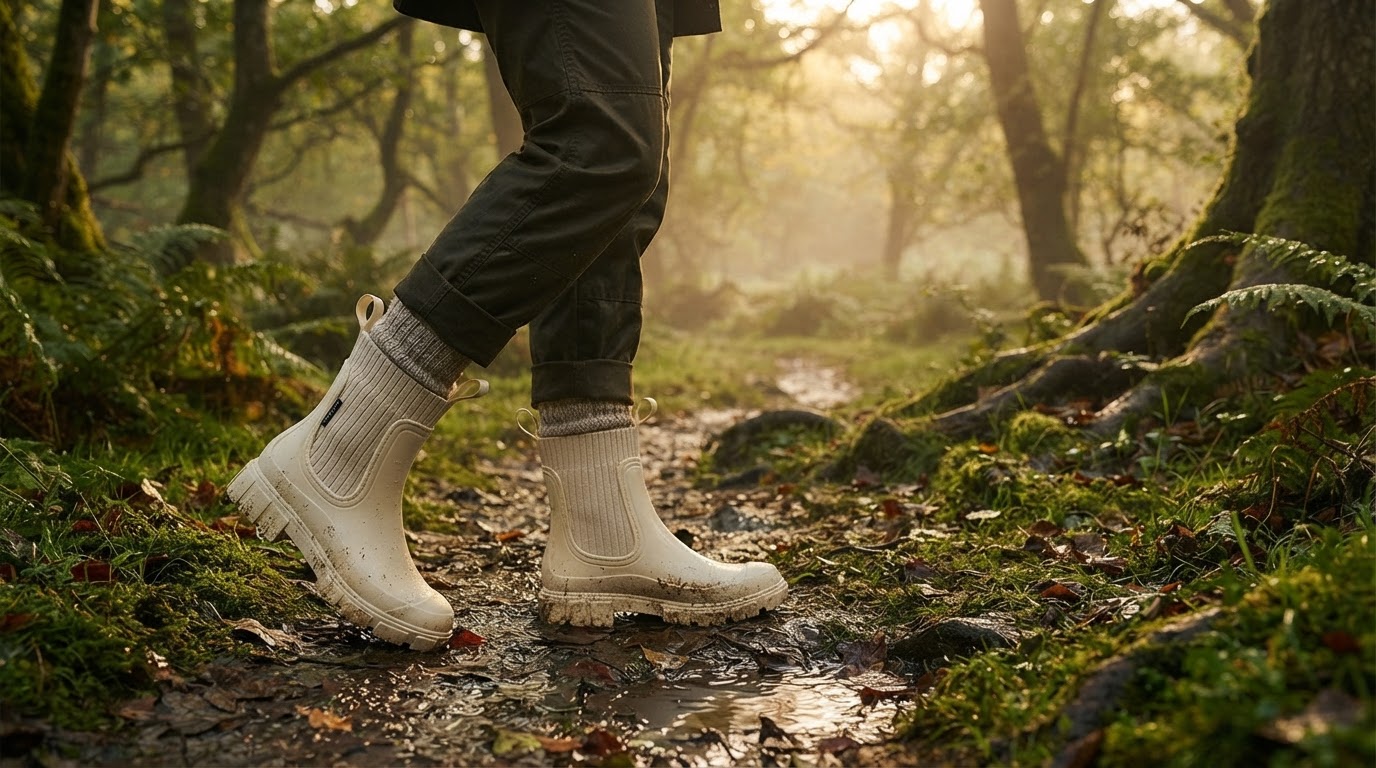
A rounded-toe rain boot framework for wet trails and long walks
 Priya RamanSenior Analyst
Most rain boots fail buyers in the same two places: the toe box is 4–8 mm too narrow after socks, and the outsole looks rugged but gives up grip on smooth wet surfaces. That is the practical tension behind women’s outdoor boots with a rounded toe: the shape is not just aesthetic. It changes how your foot loads, how your toes spread, and how confidently you move when the ground is wet.
I use a simple framework when evaluating waterproof outdoor boots: toe geometry first, surface risk second, water depth third, then warmth and styling. That order is intentionally different from how most people shop. A boot can be cute, tall, and fully waterproof, but if the toe box squeezes the forefoot or the tread is wrong for slick concrete, it becomes a fair-weather boot pretending to be outdoor gear.
Below is the framework I would use before buying a pair of women’s rounded-toe rain boots for dog walks, school runs, muddy gardens, campsites, wet trails, or standing at sports fields.
The 4-part framework: fit, friction, floodline, fatigue
A useful waterproof boot has to solve four problems at once:
The rounded toe design matters because it influences all four. A rounded toe generally gives the big toe and fifth toe more lateral space than a tapered fashion boot. It also reduces pressure points when the foot slides forward slightly on descents or when walking in thick socks.
That does not mean every rounded toe is wide. Some rounded-toe boots are round at the front but narrow through the ball of the foot. The trick is to evaluate the usable interior width, not the silhouette.
Why rounded toe shape matters more in waterproof boots
Photo by ArtHouse Studio on Pexels
Waterproof boots are less forgiving than mesh sneakers or leather lace-ups. Rubber, PVC, and many waterproof shells do not stretch much during wear. If the toe box is tight on day one, it is likely to remain tight.
That becomes important because feet expand under load. After walking, standing, or wearing thicker socks, the forefoot takes up more room. A rounded toe gives the toes somewhere to go when this happens.
A 2018 review in the Journal of Foot and Ankle Research found that incorrectly fitted shoes are common across populations and are associated with foot pain and disorders. The exact percentage varies by group, but the pattern is consistent: many people wear footwear that does not match their foot dimensions. For waterproof boots, the margin for error is smaller because the materials are stiffer and less adaptive.
For women’s outdoor boots, I look for three toe-box clues:
- The front of the boot follows a broad arc rather than a point or almond taper.
- The widest part of the boot lines up near the ball of the foot, not behind it.
- The top of the toe box has enough vertical room to avoid pressing on toenails.
Field observation: the 12-minute sock test beats the mirror test
In store photos, a rain boot is judged from the side. In real life, it is judged after 12 minutes of walking in damp conditions.
Here is the at-home test I recommend before removing tags. Wear the socks you expect to use, walk indoors for 12 minutes, and include stairs if possible. Then check four sensations: big-toe pressure, pinky-toe pressure, heel lift, and calf contact.
Observed fit checks I use before keeping a boot
| Check | Measurement or target | Why it matters | |---|---:|---| | Toe clearance in front | About 10–13 mm beyond longest toe | Allows downhill movement and thicker socks without toenail pressure | | Forefoot side pressure | No persistent pressure after 12 minutes | Waterproof uppers rarely stretch enough to fix tightness | | Heel lift | Less than about 6 mm while walking | Excess lift causes rubbing and unstable foot placement | | Shaft gap at calf | 1–2 fingers with socks or pants tucked | Too tight rubs; too loose lets rain and debris enter | | Flex point | Bends near ball of foot, not mid-arch | Reduces fatigue and awkward stride | | Sock-adjusted width | Boot still comfortable with intended sock | Sock thickness can easily add several millimeters of volume |
These are not laboratory standards; they are practical thresholds. They work because they force you to test the boot as equipment, not as an outfit.
Traction is not one thing; match it to your wet surface
When people say a boot has “good grip,” they usually mean the lugs look deep. That is not enough.
Slip resistance depends on outsole compound, tread pattern, surface texture, water film, contaminants such as mud or leaves, and how your weight loads the foot. Standards such as ASTM F2913 and ISO 13287 exist because visual inspection is unreliable. These tests measure coefficient of friction under controlled conditions, often on wet or contaminated surfaces.
The Centers for Disease Control and Prevention has reported that falls are a major cause of injury, especially among older adults, but the broader lesson applies to everyone: slips are system failures. Footwear is one part of that system.
For rounded-toe waterproof rain boots, I separate traction into three common use cases:
1. Wet pavement, tile, school pickup, grocery runs
Look for more rubber contact area and siping or channels that move water. Giant widely spaced mud lugs may feel awkward on smooth wet surfaces because there is less outsole touching the ground.
2. Mud, grass, garden beds, campsites
Look for deeper lugs with open spacing so mud can release. A flat urban sole will cake quickly and lose bite.
3. Mixed surfaces
Choose moderate lugs, not extremes. For most women buying outdoor rain boots, mixed terrain is the real use case: sidewalk, gravel, grass, porch steps, and occasional mud.
My take: the safest-looking outsole is often not the safest outsole. Counter to what you’ll read elsewhere, I do not automatically prefer the deepest tread on a rain boot. For wet concrete, painted steps, or store entrances, a moderately lugged rubber sole with good surface contact can feel more secure than an aggressive mud sole. Deep lugs are useful in soft ground; they are not a universal traction upgrade.
Waterproof does not mean the same thing as comfortable in water
A boot can keep water out and still feel clammy, cold, or unstable.
The first question is water entry height. If you walk through shallow puddles, an ankle or mid-calf waterproof boot may be enough. If you cross wet grass, hose down garden beds, or stand at the edge of fields, shaft height matters more because water often arrives as splash and vegetation contact, not just puddle depth.
The second question is interior moisture. Waterproof materials block external water, but they can also trap sweat. The National Institute for Occupational Safety and Health discusses how wet and cold conditions can contribute to discomfort and cold stress in work settings. For everyday buyers, the scaled-down version is simple: if the boot is fully waterproof and non-breathable, sock choice becomes part of the system.
For most outdoor rain boot use, I prefer:
- Moisture-managing socks over cotton socks.
- A removable insole so the boot can dry faster.
- Enough toe volume to maintain circulation in cool weather.
- A shaft height chosen for the real water exposure, not the tallest option available.
The rounded-toe decision tree
Use this decision tree before choosing a pair.
Step 1: Identify your dominant surface
Pick the surface you walk on most often when it is wet:
- Smooth pavement or tile
- Gravel and packed dirt
- Mud and grass
- Mixed urban/outdoor conditions
Step 2: Choose toe volume before boot length
Do not solve tightness by sizing up automatically. A larger boot may add length but not enough width, causing heel slip while the forefoot remains squeezed. Instead, prioritize a rounded toe with genuine forefoot room.
A good fit feels quiet: no toe pinching, no heel clunk, no need to curl your toes to hold the boot in place.
Step 3: Set your floodline
Ask: what is the deepest water or wet vegetation you realistically encounter?
- Urban rain and errands: ankle to lower-calf height may work.
- Gardening and dog walking in grass: mid-calf often makes sense.
- Heavy splash, fields, or farm chores: taller shaft may be worth the weight.
Step 4: Decide how much stiffness you can tolerate
Stiff boots can feel protective, but they also demand more energy. If the boot does not flex near the ball of the foot, your stride changes. Over a short walk, that may not matter. Over 60 minutes, it can.
For long walks, I want a sole that bends at the forefoot but resists twisting excessively through the midfoot. Too floppy feels unstable; too rigid feels like walking in buckets.
What I would check on product photos and descriptions
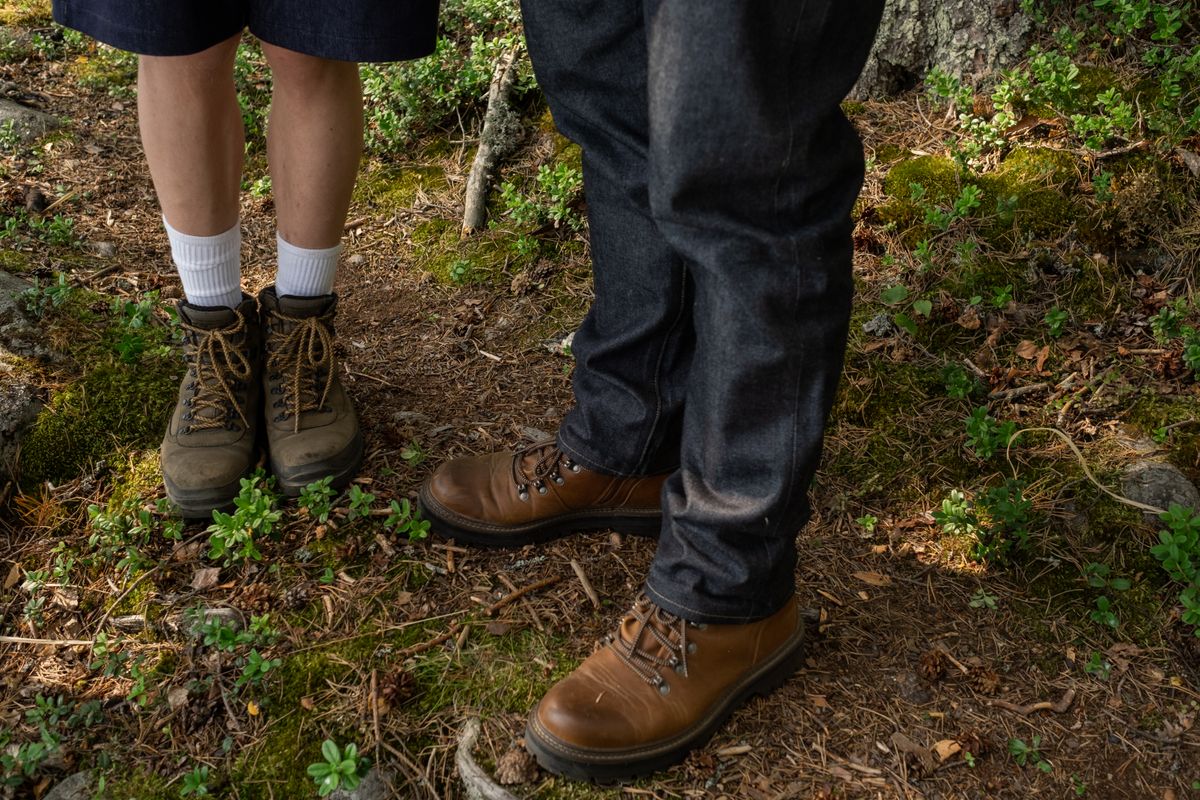
When buying online, I read boot pages like spec sheets. For women’s rounded-toe waterproof outdoor boots, I look for:
- A clear front-view or top-down image showing toe shape.
- Stated shaft height and opening circumference.
- Outsole photos, not just side glamour shots.
- Removable insole language.
- Material description: rubber, neoprene, PVC, waterproof leather, or synthetic shell.
- Lining description for warmth and drying.
- Reviews mentioning socks, calf fit, stairs, and wet traction.
Practical checklist before you keep the boots
Use this checklist during the return window:
Where rounded-toe women’s outdoor boots make the most sense
A rounded-toe waterproof boot is especially useful if you:
- Wear medium or thick socks in wet weather.
- Have a wider forefoot or dislike toe compression.
- Walk more than a few blocks at a time.
- Spend time on grass, gravel, mud, or wet pavement.
- Want a casual boot that still behaves like outdoor footwear.
The goal is not to buy the heaviest-duty boot. The goal is to buy the boot that fits the job. For many women, that means a rounded toe, enough shaft height for real splash, and an outsole chosen for the actual ground underfoot.
FAQ
Are rounded-toe rain boots better for wide feet?
Often, but not always. A rounded toe usually gives more room at the front than a pointed or almond toe, which can help wide forefeet and toe splay. However, the boot also needs enough width at the ball of the foot. If the rounded shape is mostly cosmetic and the mid-forefoot is narrow, it may still pinch. Use the 12-minute sock test rather than relying on the label.
Should I size up in waterproof rain boots?
Only if you need more length or sock volume and the heel still stays secure. Sizing up can create heel lift, rubbing, and a sloppy stride. If your toes feel squeezed on the sides, a roomier toe box is usually a better solution than extra length. Aim for about 10–13 mm of space beyond the longest toe while keeping the heel controlled.
What outsole is better for rain: deep lugs or flatter rubber?
It depends on the surface. Deep, open lugs are helpful in mud and soft ground because they bite and shed debris. On smooth wet pavement or tile, too much lug spacing can reduce contact area. For mixed everyday use, moderate lugs with water-channeling grooves are often the better compromise.
How tall should women’s waterproof outdoor boots be?
Match height to water exposure. For errands and sidewalks, ankle to lower-calf height may be enough. For wet grass, gardening, dog walking, and splashy fields, mid-calf boots offer more protection. Taller boots add coverage but also weight, warmth, and potential calf rub, so more height is not automatically better.
Sources
- ASTM F2913 slip resistance test method for footwear
- ISO 13287: Personal protective equipment — footwear slip resistance
- Journal of Foot and Ankle Research: incorrectly fitted footwear and foot pain
- CDC: Facts about falls